Metallurgical Testing Systems for Quality Control in Manufacturing: What You Need to Know
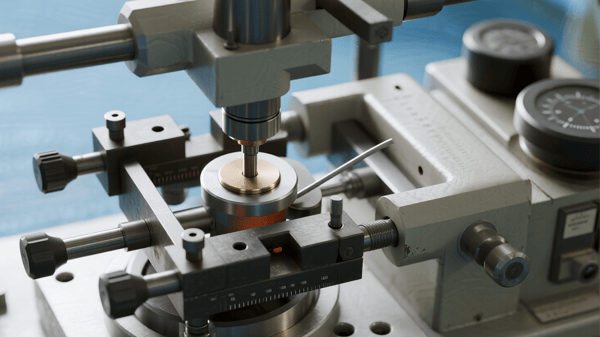
If you’re searching for “Metallurgical Testing Systems for Quality Control in Manufacturing”, you’re likely looking for the best testing methods, equipment options, standards, and purchasing considerations. This guide covers everything you need to know before investing in the right solution.
What Is Metallurgical Testing?
Metallurgical testing is the process of analyzing the microstructure, composition, and mechanical properties of metals and alloys to verify they meet required specifications. It ensures:
Material integrity (free from cracks, inclusions, or porosity)
Compliance with industry standards (ASTM, ISO, SAE)
Performance and durability under stress
Testing can be destructive (cutting samples) or non-destructive (NDT), depending on the method and production requirements.
Why Is Metallurgical Testing Critical for Quality Control?
Prevents costly failures in components used in aerospace engines, automotive safety parts, pipelines, and structural steel.
Reduces warranty claims and recalls by ensuring products meet strength and hardness criteria.
Maintains compliance with customer specs and regulatory standards.
Without proper testing, manufacturers risk catastrophic product failures, production delays, and financial loss.
Key Types of Metallurgical Testing for Manufacturing
Manufacturers use different testing systems depending on material type and application:
✅ Microstructural Analysis
Examines grain size, inclusions, and heat treatment quality.
Performed using optical microscopes or scanning electron microscopes (SEM).
✅ Hardness Testing
Measures resistance to indentation.
Common methods: Rockwell, Brinell, Vickers.
Ideal for heat-treated parts and wear-resistant components.
✅ Tensile and Compression Testing
Evaluates material strength and elongation properties.
Used for structural metals and automotive components.
✅ Impact Testing (Charpy, Izod)
Determines toughness under sudden loads.
Essential for pipeline steels, heavy machinery parts.
✅ Non-Destructive Testing (NDT)
Ultrasonic Testing (UT): Detects internal defects without cutting samples.
X-ray or Radiographic Testing: Identifies internal cracks.
Magnetic Particle & Dye Penetrant Testing: Finds surface flaws.
How to Choose the Right Metallurgical Testing System
When selecting a system for quality control in manufacturing, consider:
Material Type & Application Steel, aluminum, titanium, or composites—each requires different methods.
Testing Speed & Throughput For high-volume production, choose automated or semi-automated systems.
Compliance Standards Ensure equipment meets ASTM, ISO, and customer-specific requirements.
Integration with Production Lines Advanced systems can connect with MES or ERP systems for real-time quality monitoring.
Budget & Total Cost of Ownership Factor in initial cost, calibration, maintenance, and operator training.
Top Features to Look for in Advanced Systems
Automation: Robotic sample handling for higher productivity.
Digital Reporting: Immediate test results with traceability.
Multi-Test Capability: Ability to perform hardness, tensile, and microstructure analysis on one platform.
Data Connectivity: Supports Industry 4.0, real-time QC dashboards, and remote monitoring.
Industries That Rely on Metallurgical Testing
Automotive: Ensuring engine and drivetrain components meet fatigue requirements.
Aerospace: Testing turbine blades and landing gear for extreme stress tolerance.
Energy & Oil & Gas: Verifying pipeline steels and pressure vessels.
Construction & Heavy Equipment: Maintaining weld integrity and structural strength.
Benefits of Using Modern Metallurgical Testing Systems
Reduced scrap and rework by identifying defects early.
Faster production cycles with automated systems.
Improved compliance and customer trust through accurate, traceable data.
Lower operational costs by minimizing failures and recalls.
Where to Buy or Upgrade Your Testing Systems
Leading manufacturers and distributors offer:
Universal testing machines for tensile/compression.
Automated hardness testers for high-throughput environments.
Portable NDT devices for in-field inspections.
Look for suppliers who provide:
Installation and training
Calibration and certification services
24/7 technical support
FAQs
What is the difference between destructive and non-destructive testing?
Destructive testing removes a sample or damages the part, while NDT leaves the part intact.
Can metallurgical testing be automated?
Yes. Modern systems use robotics for sample handling and integrated software for real-time analysis.
How often should we calibrate our equipment?
Follow the manufacturer’s guidelines, typically every 6–12 months, to maintain accuracy.
Does metallurgical testing improve product compliance?
Absolutely. It ensures that products meet ASTM, ISO, and customer-specific standards.
Bottom Line
Metallurgical testing systems are essential for maintaining product quality, safety, and compliance in manufacturing. From hardness testing to advanced NDT, these systems ensure that every component meets rigorous standards before it reaches the customer.
If you’re ready to upgrade your quality control process, explore solutions that offer automation, data connectivity, and multi-test capabilities. The right system can help you reduce costs, increase efficiency, and achieve zero-defect manufacturing.